
One Quiet Honor | Chrysler Museum of Art
There are some things that are hard to write about without sounding like you’re bragging.
This is one of them.
And if you know me at all, you know I am perfectly capable of saying something ridiculous at exactly the wrong moment, so I have been trying to find the right words for this.
Around November 9, 2025, four of my photographs became part of the permanent collection of the Chrysler Museum of Art in Norfolk, Virginia.
Even writing that feels strange.
Not because I do not believe in the work. I do. I have spent most of my life chasing these moments, through weather, mud, snow, heat, mosquitoes, bad roads, long hikes, sore backs, wrong turns, missed meals, and plenty of mornings where the sunrise apparently had other plans.
But when a museum places your work into its permanent collection, it feels different.
A sale is wonderful. A collector choosing to live with a piece is deeply meaningful. But a museum collection carries another kind of weight.
It says, in a quiet but lasting way: This should remain.
That is the part that stops me. Because I have never thought of these photographs as simply pictures of places. A tree is not just a tree. A mountain is not just a mountain. A river is not just a river. At least not when the light is right and the world has gone still enough to let you hear what is underneath it all.
To me, these images have always been evidence.
Evidence that the earth was saying something.
Evidence that beauty still exists without asking permission.
Evidence that for one brief, fragile moment, light and land and weather and spirit all came together, and I happened to be standing there with a camera large enough to qualify as a minor orthopedic hazard.
Which, naturally, is how all great spiritual experiences should begin.
The Four Photographs
Each of the four selected photographs carries its own kind of silence.
The Thin Veil has always felt like an image standing between two worlds. It does not shout. It does not perform. It asks you to slow down. It asks you to look again. There is something in that image that feels less like scenery and more like presence.
And maybe that is what I have always been chasing.
Not scenery.
Presence.
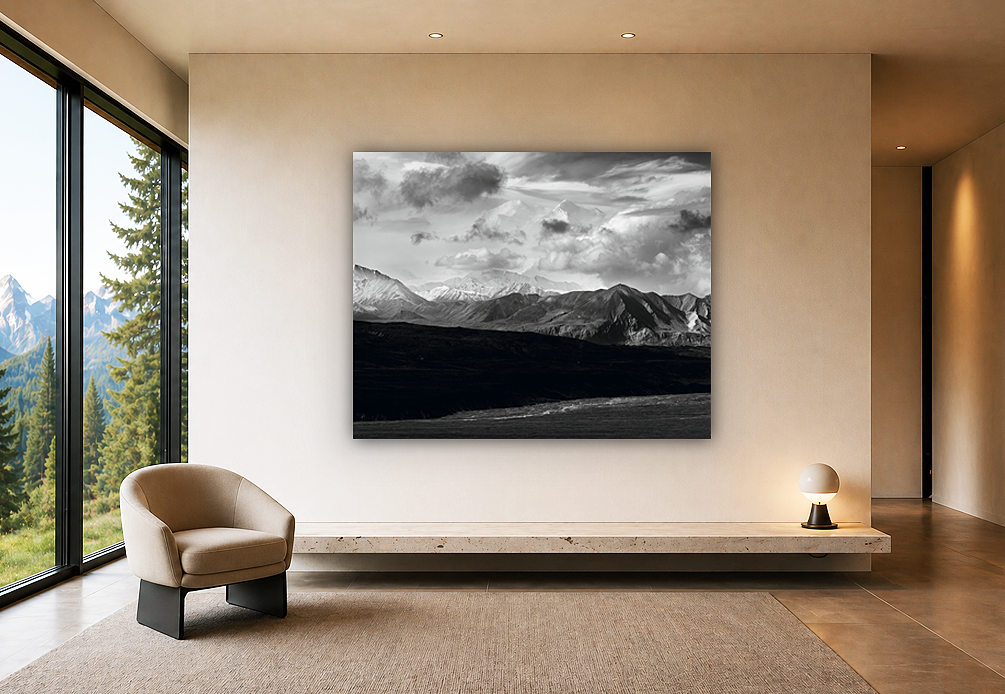
Trees of the Mist is one of those photographs where the world seems to soften just enough to reveal something hidden. Mist has a way of taking the familiar and making it mysterious again. Trees that might otherwise be passed by suddenly become ancient, quiet, and full of meaning. I have always loved that about the natural world.
It does not need to change. We do.

El Cap at Sunrise Along the Merced River is, of course, a photograph made in the presence of one of the great monuments of the American landscape. El Capitan does not need my help. It was doing just fine before I showed up, and I suspect it will continue doing fine long after we are all gone.
But sunrise along the Merced River can do something remarkable. It can take stone, massive, immovable, almost impossible stone and touch it with tenderness.
That is what I wanted.
Not just the grandeur.
The gentleness.

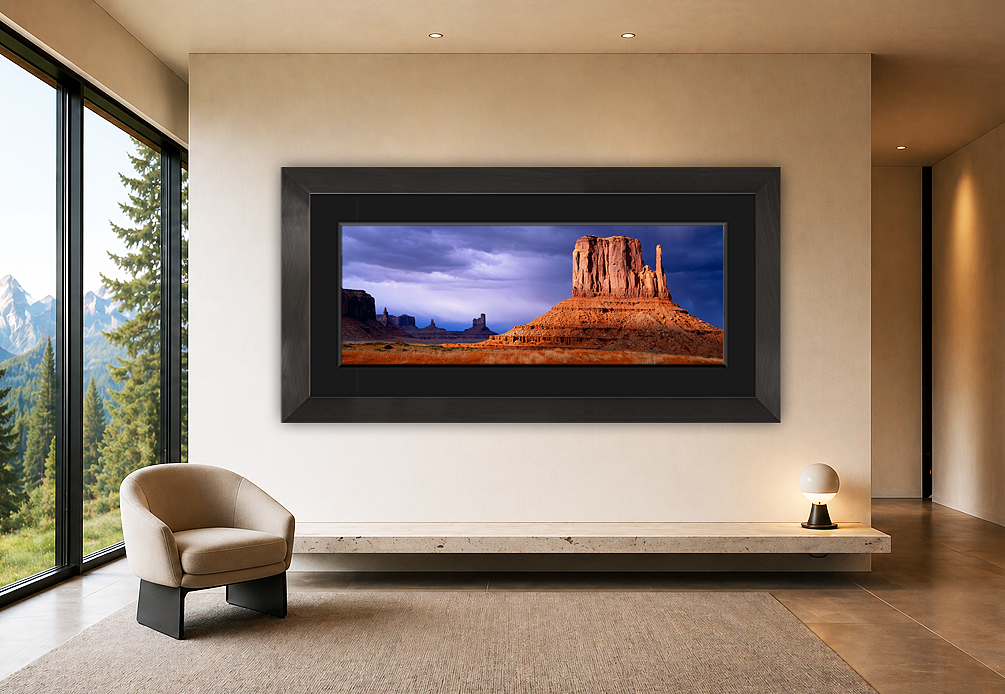
And then there is…
That one makes me smile.
It has rhythm. It has balance. It has a bit of visual mischief in it. The desert is often misunderstood as empty, but it is anything but empty. It is full of structure, gesture, line, shape, restraint, and surprise.
Nature, as it turns out, has a better design department than most corporations.
Who knew?
A Permanent Collection
The phrase permanent collection carries weight.
Artists make things in private, then send them out into the world and hope they survive. We hope someone sees them. We hope someone feels something. We hope the work does not end with us.
That is the deeper hope.
Not applause.
Not recognition.
Not even sales, though I remain strongly in favor of those, given my ongoing commitment to food, shelter, and keeping the lights on.
The deeper hope is that the work keeps breathing.
That one day, someone I will never meet might stand in front of one of these photographs and feel something close to what I felt when I stood there in the first place.
That is what this means to me.
These four images have been given a place to remain.
The Night at the Chrysler

The Chrysler Museum of Fine Art giving me a very kind introduction.
Earlier in 2025, I had the privilege of speaking at the Chrysler Museum as part of the Masterpiece Spring Program.
The talk was titled:
Unspoken | What the Earth Whispers
That title still feels right to me.
Because the evening was never really about photography in the ordinary sense. I was not there to give a technical lecture about lenses, film, bellows, movements, or how many ways dust can ruin your will to live. Although, for the record, that number is very high.
The talk was about wonder. It was about silence. It was about the sacred act of paying attention.
It was about what happens when the natural world gives you something that cannot be explained, improved, exaggerated, or manufactured.
That night at the Chrysler was one of the most meaningful evenings of my career. The response from the audience was generous beyond anything I expected. People shared thoughts and feelings with me afterward that I will carry for the rest of my life.
And now, four works from my life’s effort have entered the Museum’s permanent collection.
That is not a small thing.
At least not to me.
GRATITUDE
I am deeply grateful to the Chrysler Museum of Art, to The Masterpiece Society, and to everyone who made that evening and this acquisition possible.
I am grateful to the collectors, patrons, friends, and supporters who have believed in this work over the years.
And I am grateful to the wilderness itself, which has patiently tolerated me wandering around with a giant camera, muttering at clouds and waiting for light.
These four photographs now belong to a larger story.
They are still mine in the sense that I made them. But they are no longer only mine. They have entered something bigger, a public trust of memory, beauty, silence, and meaning.
That is humbling.
And maybe that is the right word.
Humbling.
Because in the end, the earth does not need us to make it beautiful. It already is.
Our job is simply to notice.
And, if we are very lucky, to bring back a little evidence.
Until Next Time, Take Care & I’ll,
See Ya on the Trail!
Rodney Lough Jr.
I'd love to hear from you…
What do you think of them apples?
Drop a comment below, I read every one.